Chefs in Kuala Lumpur are using local produce in unique and inventive ways and the dining scene is becoming much richer (and more sustainable) for it
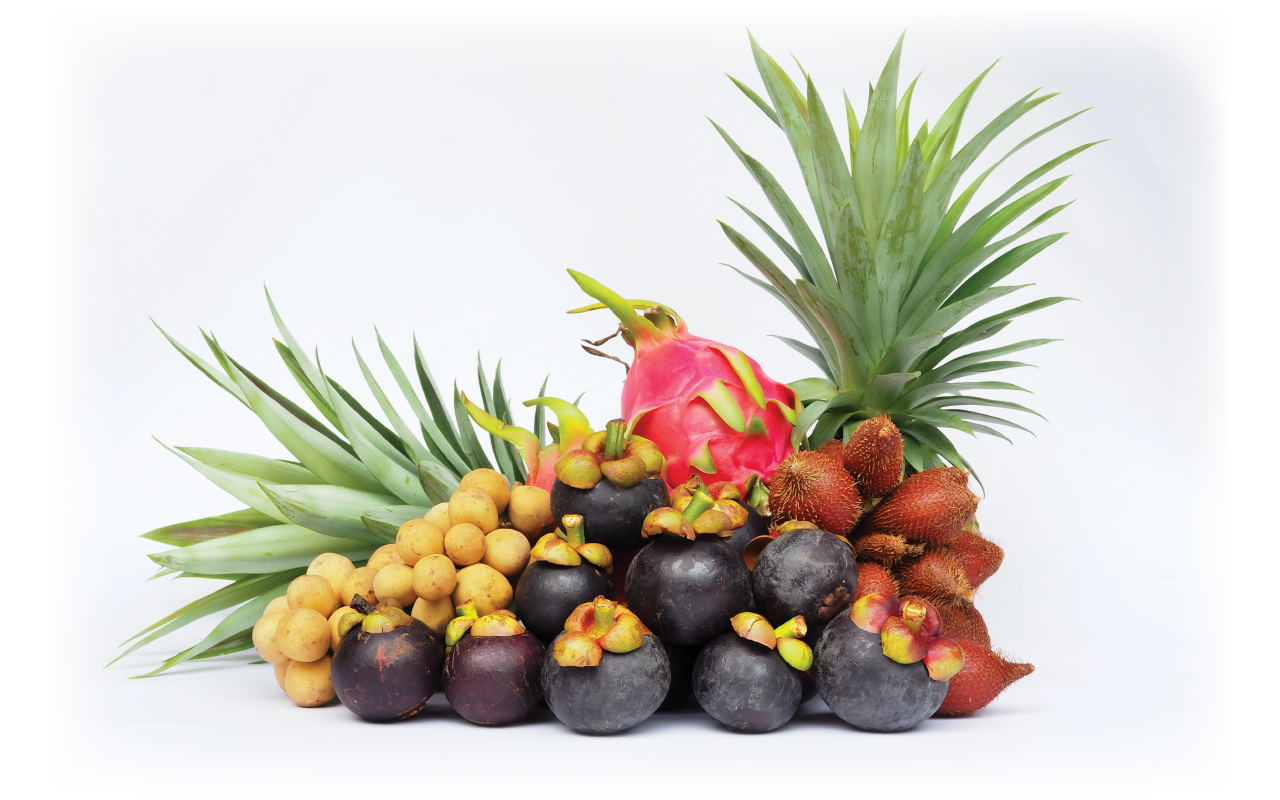
The abundance of produce found in tropical Malaysia is staggering. Not only does the country have plenty of space for farming, but its geography and climate lend themselves to growing a wealth and variety of fruits, herbs and vegetables. The chilly climate of the Cameron Highlands, where tea has flourished since colonial times, makes it a perfect spot for temperate crops like strawberries, tomatoes and cabbages, while the optimal rainfall found in Sungai Pelek has led to its status as Malaysia’s “dragon fruit capital”.
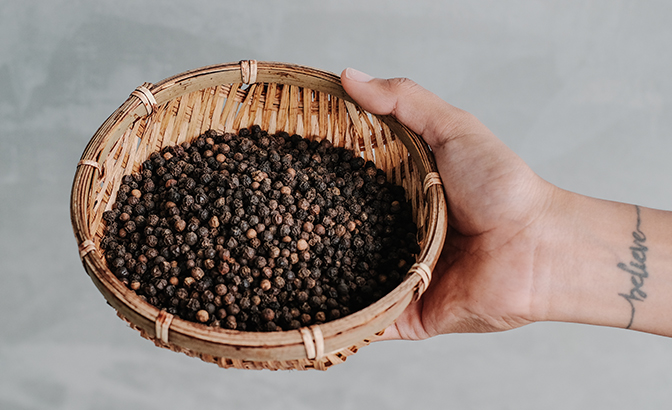
Despite this abundance, foreign ingredients are often still favoured in the country’s higher-end restaurants and cafés. According to a 2017 USDA Global Agriculture Information Network report, Malaysia still imports about 70% of its food needs, including beef, lamb, dairy products, baking ingredients, pasta and temperate fruits and vegetables.
Despite this abundance, foreign ingredients are often still favoured in the country’s higheraBut of late, the tides are turning. Kuala Lumpur in particular has witnessed a growing number of chefs – inspired by a global movement towards sustainability – embrace produce from closer to home. Many of these chefs are returnees from stints abroad who questioned why Malaysia’s bountiful harvest of produce was being relegated to second best. The result? An emerging wave of restaurants now serve regional fare filled with ingredients sourced from the organic farms and urban gardens that are growing up in and around the city.-end restaurants and cafés. According to a 2017 USDA Global Agriculture Information Network report, Malaysia still imports about 70% of its food needs, including beef, lamb, dairy products, baking ingredients, pasta and temperate fruits and vegetables.
The Pioneer – Darren Teoh Dewakan
The undoubted forerunner of this movement is chef Darren Teoh, previously a molecular gastronomy lecturer at Kolej Damansara Utama’s (KDU) School of Hospitality, Tourism and Culinary Arts. In 2010, Teoh, who has an impeccable pedigree staging at famous Michelin-starred restaurants like Noma in Copenhagen and Amador in Germany, wrote a book, Re-definition: Molecular Cuisine: Traditional Recipes Through a Modern Kaleidoscope. The premise was simple but groundbreaking: modern Malaysian cuisine that championed local ingredients using fine dining techniques.
However, Teoh’s approach only hit the mainstream when he opened the restaurant Dewakan in 2015. A portmanteau of two Malay words meaning “food of the gods ”, Dewakan was an oddity. In the far reaches of Klang Valley on the KDU campus, his ingredient-led menu also focused almost exclusively on local produce.
Teoh’s bold yet refined use of humble and obscure ingredients sourced from local suppliers created a real buzz among the city’s gourmands more used to supping on Western-centric haute cuisine.
The quick-witted Teoh shrugs off any association with “farm to table”, arguing that he’s just looking to eliminate the homogeneity of produce by working directly with suppliers. As evidence of this ambition, the restaurant now sources products from specialised farms like A Little Farm on the Hill in Bentong, Pahang, which supplies organic vegetables; jungle foragers like the orang asli (indigenous people of Malaysia) in Pahang who harvest cocoa; and local fishermen from Pulau Ketam. “My motivation has always been to collate and create a compendium of local ingredients and to bring these back from obscurity into the mainstream,” says the 37-year-old chef.
Whether Teoh’s ethos is considered trendy or traditional, sustainability clearly goes hand in hand with his approach. He forges close relationships with those suppliers he feels are offering the best produce. As an example, Teoh waxes lyrical about one supplier, Boden Farm, located about two hours from the capital. The goats here live in elevated enclosures, which means cleaner, waste-free pens. This makes for happier goats, which Teo says results in tastier, better quality meat. Diners can decide for themselves by ordering the dish of Milk-Fed Goat From Boden Farm With Petai-So, which features on the current Kayangan tasting menu. The goat is slow roasted over charcoal on a bed of Chinese chives before being minced and sautéed with the chives to create a wonderfully smoky, complex dish.
The Selangor native is also hopeful about a trickle-down effect. “Like in fashion where haute couture diffuses into the mass market, other restaurants [will] think, ‘If Dewakan is using it, maybe we’ll give it a go.’”
dewakan.my
The Sentimental Gardener – Jeff Ramsey Babe Gastro
With his Japanese-Korean-Irish-American heritage and stellar background (he has worked with Catalonian chef José Andrés, protégé of Ferrán Adriá of El Bulli ), chef Jeff Ramsey is best known for pushing boundaries and blending cultures in his dishes. The witty and upbeat 42-y ear-old – who was part of the Tapas Molecular Bar team in Tokyo when it was awarded a Michelin star – is the c o-owner of Babe Gastro, which opened in KL in 2015.
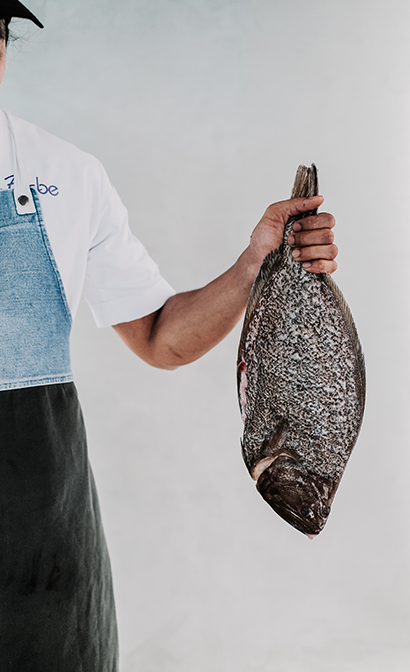
Yet, despite his molecular roots, “farm to table” is a central part of the culinary ethos at Babe, reflected in the exacting seasonal menu. At the time of writing, the menu was celebrating the end of summer with dishes like breaded hirame with tzatziki, which features summer flounder with cucumber caviar, kabocha (Japanese
squash) and ceviche of hamachi (Japanese amberjack).
This type of food demands the freshest and finest quality ingredients,
which Ramsey sources from local organic farmers like Food Forest Farm in the Cameron Highlands and, like chef Teoh, A Little Farm on the Hill.
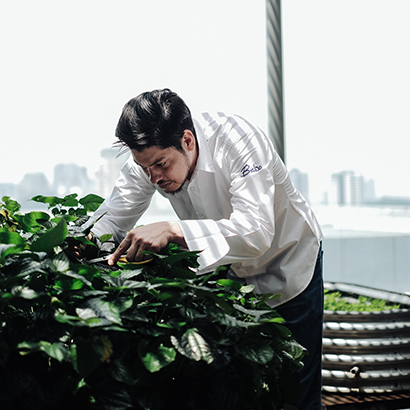
But the passionate chef takes the locally sourced concept a stage further through a small but well-kept organic rooftop garden, on the open top floor of the building where the restaurant is located. The garden allows the kitchen team to experiment with seeds that won’t
be found in commercial farms, such as heirloom okra and shishito peppers.
“To be honest, our garden is not large enough to fully support a busy restaurant,” admits Ramsey, “But even though it doesn’t have a huge impact on the menu, it has a big impact on the team.”
This impact comes from his crew spending two to three months caring for the plants before they’re ready to harvest. At Babe Gastro, that doesn’t just mean providing enough light or water but goes as far as playing the seedlings classical music to encourage them to thrive.
“You have mixed feelings on harvest day because you’ve planned out exactly how you will prepare – insert absurd pet name – to make him so tasty that you are fully honouring his life.”
Ramsey believes that by understanding the effort required to grow the simplest ingredients, like coriander, you can gain a very different respect towards food in general.
“You realise how much work goes into making the food you eat every day,” says the affable chef. “You get an amazing level of respect for the farmers and their sacrifice. I wish everyone on the planet could experience this.”
babe.com.my